Wind Response Dynamics
Moving air generates a tremendous force over relatively small areas, witness the idea of the sailboat.
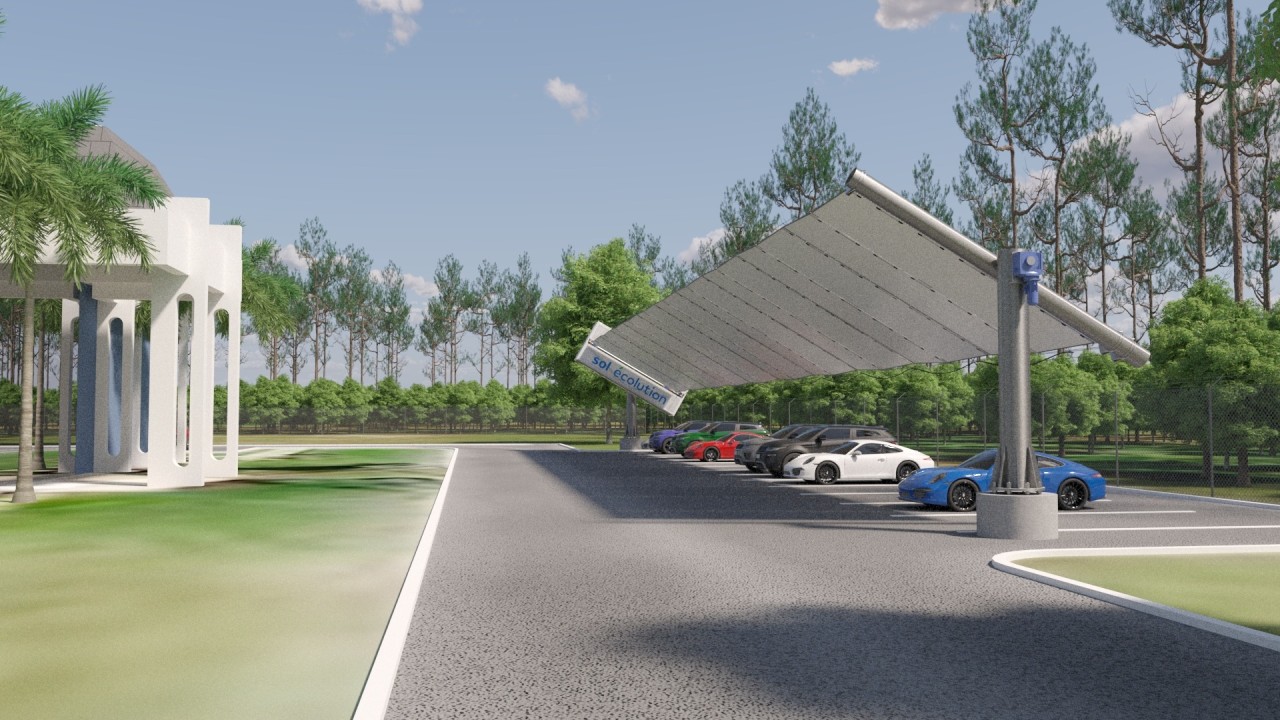
The Sabal Solar Canopy panel area is 180 square meters, or just about 2,000 square feet. This is just slightly less than the total sail area of a 75 foot monohull racing boat in the America's Cup, sporting sails of 225 square meters (2,420 square feet).
Another key difference is that we don't want the Sabal Canopy to go anywhere. Which means that when the wind blows we have to take great care not to have any wind profile at all. This is easier said than done.
The expected max tilt angle for a our single axis tracker is 30 degrees, although that is a software parameter: the canopy can tilt to 90 degrees as a spectacle. The back of the panels form a large projection screen and the canopy functions as a night-time 40 meter wide movie screen.
But movie night will come to an abrupt end if a 30mph squall comes through and breaks the giant screen. The Sabal Canopy will go from 30 degrees to 0 degrees tilt in under five seconds, which is a long time. The solution is to have a network of intelligent wind sensors combined with public meteorological data that make it clear that the Poseidon Adventure will receive another 70's retro screening tomorrow.
The distributed networked algorithm that manages how the Canopy responds to proximity wind levels is Sabal Wind Response Dynamics: a connected set of sensors and weather data tells the canopy controller when to hold (set tilt angle to 0) and when to fold, like a card player, and in real time. The canopy can tolerate to 200mph continuous wind when folded in its container, so there is a very high likelihood that after the storm the panel will generate power for immediate, life-saving utilities like water and air conditioning.